The New York Stock Market Crash of 1929
✍ By Sarthak Jain | 🌍 India | 📅 Thu Oct 23 2025
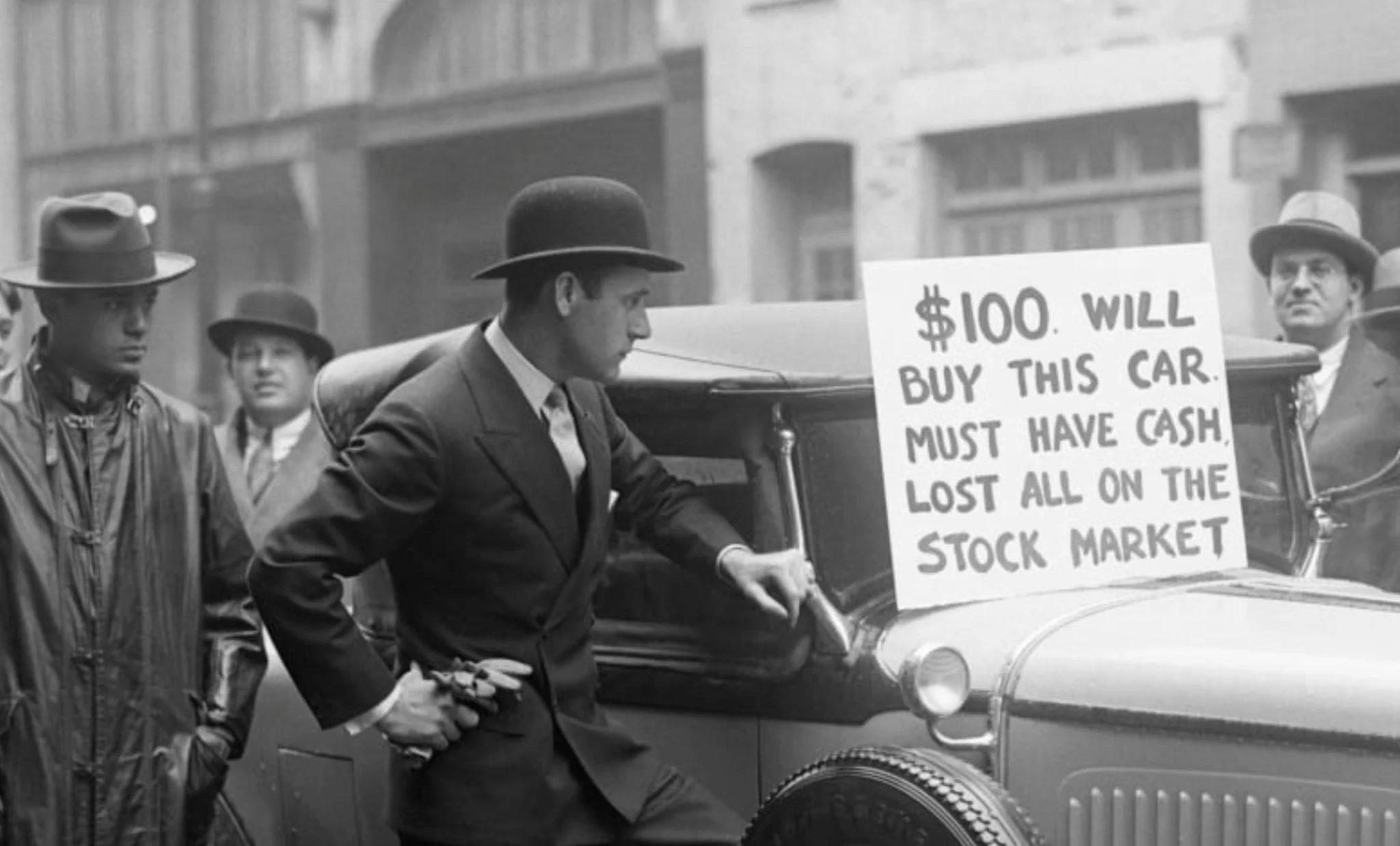
The Wall Street crash of 1929 was a major market crash of the New York Stock exchange. It was preceded by the Roaring Twenties, which saw major American indices such as Dow Jones Industrial grow ten-fold. What followed was years of economic depression, with industrial and farm production slumping to an all-time low.
After the Great War or World War 1, optimism was high. Farmers in USA saw their crop’s prices soar up as many young men had returned from the war. Moreover, the newly industrialized America saw people buying new tech items such as cars, washing machines, fridges etc. This in turn created demand which industries rushed to fill in. Thus, people had an optimistic view of the US markets. This period of optimism and over production is called the Roaring Twenties. Now, the Federal Reserve saw this as a great opportunity to reduce the interest rate to further super charge the economy. People started to spend more and profits of companies rose and so their stocks also became buoyant. The new tech stocks started to rally and returns on these equities rose. Now, the public was upset about the low returns on their bank savings and wanted a piece of the equity market’s high returns. A new industry of brokerage houses, investment trusts, and banks enabled ordinary people to purchase corporate equities with borrowed funds called margin accounts. Basically, people would put down 10% of the price of the stocks they were buying and borrowed the rest. The stocks were treated as the collateral to the loan. People started to pour their money into the stock market and so the prices surged even more. The Price to earnings ratio for some stocks became 32 which is far from ideal. Soon Fed understood that the market has become overpriced and the money that should have gone to industries is now fuelling the market rally. The Fed decided to cut lower money supply in an effort to control the highly speculative market. This however had a contractionary effect on the market as now industries had low amount of money available. Moreover, years of overproduction had glutted the market and people stopped buying these products. Hence, production in these key industries fell. This reduced investors confidence and a small crash occurred in March after continuous warnings by US Fed. However, prices still pushed up and another small crash occurred in September called the Babson break. This started the slowing down of markets and October saw the main selling event. On October 24, known as the Black Thursday, market value fell 11%. The market started to free fall from here onwards and Black Monday saw the highest selling activities. The traders started to liquidate the stocks which made up the collateral of the Margin accounts in an attempt to recover the losses. This further increased the selling activities and markets crashed. People got scared as their savings vanished and got fired from their jobs. This started the 10 year long depression known as The Great Depression.
📖 More Articles


Jabong’s Fade-Out: A Cautionary Tale in Indian E-commerce
✍ Sarthak Jain
Story of Takeoff to Turbulence
✍ Sarthak Jain

CCD’s Quiet Retreat
✍ Sarthak Jain
Why Dazo Couldn’t Scale: A Case Study in Food-Tech Fragility
✍ Sarthak Jain⭐ Reviews
✨ Be the first one to add a review!