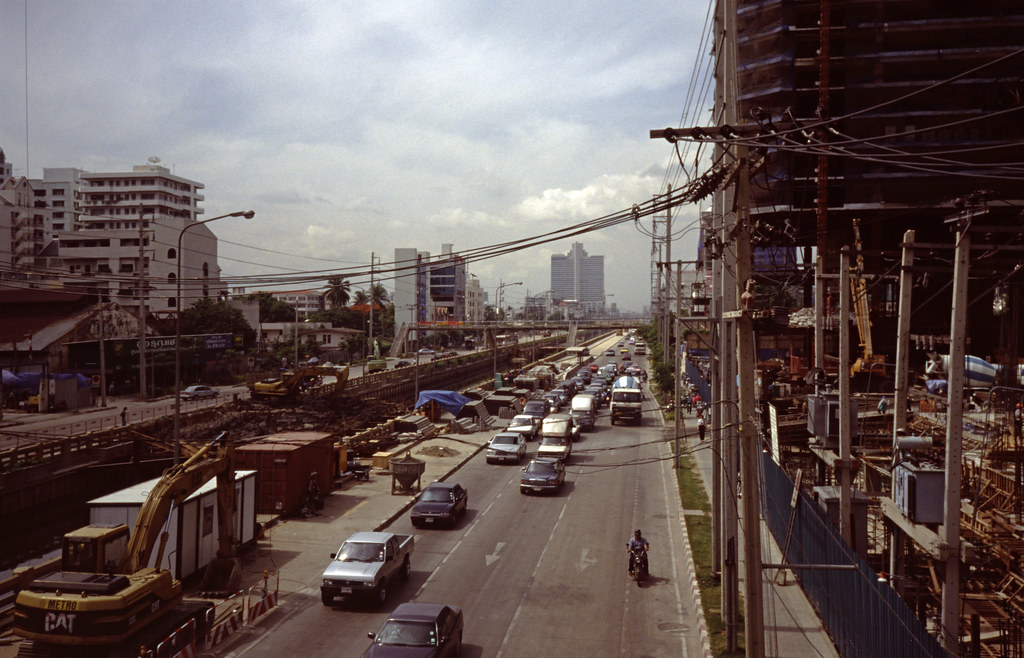
The Asian Financial Crisis (1997-98)
✍ By Sarthak Jain | 🌍 India | 📅 Thu Oct 23 2025
The Asian Financial Crisis (1997-98)
The Asian Market Crisis in 1997 was one of the largest crashes faced by the Asia Pacific region. No one anticipated that Asian economies, known for their prudent fiscal policies, would face such a catastrophe. In the 1990s, Asian economies were admired as the most successful emerging economies. The rise of these economies is often called as The Asian Miracle. They displayed an average GDP growth of 8-12% with high rate of interest. These countries had become the favorite market for foreign investors to park their money in. With even more liquidity in the market, asset prices started rising. The stock market also saw a bull run thus hot money flowed into companies. However, there were a few systemic issues which investors had overlooked. These countries had large private debts in foreign currencies, making them vulnerable to exchange rate fluctuations. But the investors would still provide loans since these countries had pegged their currency to a particular exchange value with the dollar. This created a false sense of security for investors. In the 1980s and 90s, the tiger economies were manufacturing hubs of electronic goods. A significant portion of their foreign exchange earnings came from semiconductor exports. China wanted a share of this booming market and aimed to achieve it by offering cheaper goods. Hence, they decided to devalue their currency, Renminbi, against the US dollar. This was not good for the ASEAN countries as a major market share had gone to China. Now, as we know they had pegged their currency to a particular value to the dollar. This meant that they had to sell their forex so as to maintain that value. Moreover, their exports had reduced which means their forex had started to deplete. Soon, hedge funds and investors around the world had sensed an opportunity to speculate on these currencies. This further put downward pressure on these currencies further prompting the central banks to sell the reserves. Investors withdrew from Southeast Asia and moved funds to the U.S. after the Federal Reserve raised interest rates, making it a more attractive destination. Now, the forex reserves had depleted and the central banks of these countries had no choice but to float their currency and have the market dynamics determine the value of the currencies. This propelled the value of currencies such as Thai Baht downwards. Companies saw their debts skyrocket and so they were unable to repay these debts thus declaring bankruptcy. Seeing the valuation of their currency plummet, central banks decided to increase the rate of interest to stabilize the currency. This was bad for businesses as borrowing became costlier, further increasing losses. Witnessing the economic collapse in some of Asia’s strongest economies, the IMF intervened by introducing reforms and injecting liquidity through bail out packages. IMF recommended increasing interest rates and allowing insolvent companies and firms to fall. Critics however noted that this was contradictory as to stimulate the economy, interests need to be cut and govt spending needs to be increased. China had also seen significant foreign capital inflows, but during the 1997 Asian Financial Crisis, it suffered minimal losses. The main reason for China's relative insulation was its **strict capital controls and strategic management of foreign investments**. Instead of allowing excessive speculative investments in **real estate and stock markets**, China directed much of the foreign capital—particularly **Foreign Direct Investment (FDI)**—into **infrastructure and manufacturing**, which generated long-term economic returns. In contrast, countries like **Thailand and South Korea saw large inflows of short-term capital ("hot money")**, much of which was **invested in speculative and non-productive assets like real estate and financial markets**. When the crisis hit, these economies suffered massive capital flight, while China remained relatively stable. The consequence of the crisis was devastating. The GNP of Thailand fell down by 11% while for Indonesia it’s GDP fell by 13% while currencies lost 30-80% value. Many banks and financial institutions **became insolvent** due to bad loans and foreign debt burdens. The **1997 Asian Financial Crisis** exposed the risks of excessive foreign debt and weak financial regulation, leading to economic collapse in several countries. Currencies plummeted, businesses went bankrupt, and millions lost jobs. The IMF intervened with bailout packages, though its policies faced criticism. In response, Asian economies strengthened financial regulations and built foreign exchange reserves to prevent future crises. The lessons from 1997 continue to shape global economic policies today.
📖 More Articles


Jabong’s Fade-Out: A Cautionary Tale in Indian E-commerce
✍ Sarthak Jain
Story of Takeoff to Turbulence
✍ Sarthak Jain

CCD’s Quiet Retreat
✍ Sarthak Jain
Why Dazo Couldn’t Scale: A Case Study in Food-Tech Fragility
✍ Sarthak Jain⭐ Reviews
✨ Be the first one to add a review!