The Madoff Investment Scandal
✍ By Sarthak Jain | 🌍 India | 📅 Wed Oct 22 2025
A Financial Deception
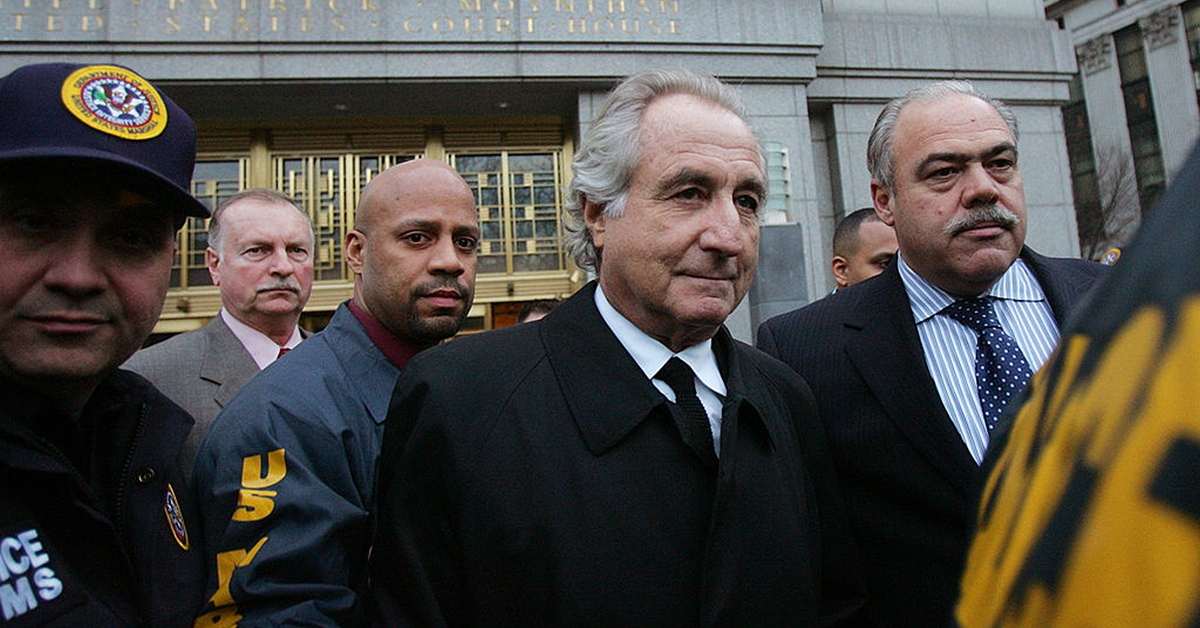
The Madoff investment scandal, which unraveled in December 2008, represents an unparalleled breach of financial trust and regulatory oversight, marking one of the most egregious and sophisticated cases of investment fraud in modern history. Orchestrated by Bernard L. Madoff, a prominent figure in the financial industry and a former chairman of the NASDAQ stock exchange, the scheme functioned as a massive Ponzi operation, siphoning billions of dollars from unsuspecting investors. This analysis delves into the intricate structure of Madoff’s scheme, the systemic failures that allowed it to persist, and the profound implications for financial governance and investor protection. Bernard Madoff cultivated a reputation as an astute and trustworthy financial innovator. In 1960, he founded Bernard L. Madoff Investment Securities LLC, which initially operated as a legitimate trading enterprise. Over time, Madoff earned widespread acclaim for purportedly delivering steady, above-market returns, which cemented his standing as a paragon of financial expertise. His role as NASDAQ’s chairman further amplified his credibility, endowing him with significant influence and prestige. However, beneath this façade of legitimacy lay a meticulously orchestrated fraud of staggering proportions. Madoff’s operation was predicated on the classic Ponzi scheme model, wherein returns to earlier investors were financed entirely by capital inflows from new investors, rather than through legitimate investment activities. The scheme’s longevity was underpinned by Madoff’s formidable reputation and his strategic manipulation of investor psychology. Madoff’s fraudulent enterprise exhibited an extraordinary degree of sophistication and operational subtlety. Central to its success was his ability to entice investors with promises of consistently high returns, irrespective of prevailing market conditions. These returns were entirely fabricated, as no substantive trading activities underpinned the reported performance. A network of feeder funds managed by intermediaries pooled capital from high-net-worth individuals, charities, and institutional investors, playing a pivotal role in channeling billions into Madoff’s operation. The implicit endorsement of these funds lent further credibility to his scheme. Additionally, Madoff deliberately fostered an air of exclusivity, often declining new clients to cultivate a perception of scarcity and desirability. This tactic reinforced investor confidence and heightened demand for access to his purportedly elite services. Detailed account statements, meticulously fabricated to show steady gains, were issued to investors, bolstering confidence in the scheme and encouraging reinvestment rather than withdrawals. The global financial crisis of 2008 catalyzed the scheme’s unraveling. As investors, spurred by broader economic turmoil, sought to liquidate their holdings, Madoff’s operation faced insurmountable redemption requests. Devoid of the continuous influx of new investments required to sustain the scheme, it collapsed under its own weight. On December 10, 2008, Madoff confessed to his two sons—both executives within the firm—that his investment advisory business was entirely fraudulent. They reported him to federal authorities, leading to his arrest by the FBI on December 11. In March 2009, Madoff pleaded guilty to 11 felony charges, including securities fraud, wire fraud, and money laundering. He was subsequently sentenced to 150 years in federal prison. The ramifications of Madoff’s fraud were both extensive and profound. Estimates of losses range from $17.5 billion in principal to $64.8 billion when accounting for fictitious gains. Thousands of investors, including retirees, philanthropic organizations, and pension funds, suffered catastrophic financial losses. The scandal eroded public trust in the financial system, exposing critical vulnerabilities in regulatory frameworks and oversight mechanisms. The Securities and Exchange Commission (SEC) faced intense scrutiny for its repeated failure to act on credible warnings about Madoff’s activities. The scheme’s fallout extended beyond individual victims, destabilizing financial institutions and charitable organizations worldwide, and prompting a reevaluation of investment practices and fiduciary responsibilities. The Madoff scandal underscores the necessity of robust regulatory frameworks and rigorous due diligence. Investors must demand greater transparency and independently verify performance metrics, as blind reliance on reputation or uncorroborated claims can lead to disastrous outcomes. The scandal catalyzed significant regulatory changes, including the Dodd-Frank Act, which sought to strengthen financial oversight and enhance protections for investors. Educating investors to critically evaluate opportunities and recognize red flags is essential. Offers of consistently high returns, particularly in volatile markets, warrant heightened scrutiny. Regulators must employ advanced analytical tools and proactive measures to identify anomalies and mitigate risks, ensuring that oversight mechanisms evolve alongside increasingly sophisticated financial operations. The Madoff investment scandal represents a seminal moment in the history of financial fraud, serving as a stark reminder of the perils of unbridled greed and systemic complacency. While the fallout from Madoff’s actions was devastating, it also spurred critical reforms aimed at safeguarding the integrity of financial markets. For future investors and policymakers, the enduring lessons of this scandal emphasize the paramount importance of vigilance, accountability, and an unwavering commitment to ethical standards in finance.
📖 More Articles


Jabong’s Fade-Out: A Cautionary Tale in Indian E-commerce
✍ Sarthak Jain
Story of Takeoff to Turbulence
✍ Sarthak Jain

CCD’s Quiet Retreat
✍ Sarthak Jain
Why Dazo Couldn’t Scale: A Case Study in Food-Tech Fragility
✍ Sarthak Jain⭐ Reviews
✨ Be the first one to add a review!